When Gratitude Eludes You

Photo by Yura Forrat 

We celebrate Thanksgiving in the United States in November. Stories of thanks and gratitude are abundant. But what if gratitude eludes you? What if in the storm you do not see any clear skies or rainbows? When the world seems high on life, and you are not, then what?

I saw a post that read: If you are having trouble finding something to be grateful for, check your pulse.

There is always gratitude in our journey. I believe that is true. Sometimes gratitude is difficult to access. I empathize with those unable to find gratitude in a situation. There is nothing wrong with you. You are not broken. Sometimes it is difficult to see beyond the hardship.

Three years ago, my strength was tested. I was unable to see anything positive in my situation. I thought the pressure would crush me. I could not find a silver lining. At the time, that was my truth. As I began to write about gratitude today, the memories of that time rushed through my mind. I knew I had to change directions. I decided to be vulnerable. I would write about a time I was not grateful. I feel anxiety about sharing this as I type. As I muster the courage to show the ugly bits, fear and anxiety join the party in my mind. Fear and anxiety have kept me from opening up. Today I decided to be brave and vulnerable. Look at me channeling my inner Brené Brown.

In 2019 my husband was hospitalized. Todd has battled with anxiety, and depression since Emily was a toddler. With proper medical care, his condition was manageable. This time was different. I was terrified and felt alone. I have never discussed the impact the event had on me. I held in the trauma and sadness. It was as if releasing my pain would betray him.  

Todd was in the hospital. Justin was living away from home. Justin had just finished a year at UCSB. He had decided not to continue his studies but was locked into a lease for another year. He was working at UPS and learning some tough lessons about responsibility and commitment. We knew Todd was going to be out of work for an extended period. I was caring for Emily alone. I was doing my best to maintain my duties for my employer. I did not have family members that could help care for Emily.

I was unable to sleep. As my head hit the pillow, the chatter would commence. I was worried about Todd and Justin. The guilt I was carrying was overwhelming. I was too busy caring for myself and Emily. I did not see that Todd was in decline. I had let them down. I was not doing enough. I was not able to be there for everyone. I was failing at everything.

I was concerned about paying bills and the long-term impact of all of it. Todd and I have always worked well as a team. We have worked together caring for Emily. We both had times when we were down, but never at the same time. When one was down, the other would pick up the slack. We both had nothing to give, and Emily needed us. I wasn’t sure how things would progress. Everything seemed fragile and uncertain. I was not able to see all the things to be grateful for that were around me. I could only see the struggles.

As time passed, my perspective shifted. I was never alone. I had the support of the staff from AbilityFirst. The after-school program allowed me to visit Todd at the hospital after work. Staff volunteered to bring Emily to my house if I was running late to pick her up. The company I work for was extremely supportive and flexible. Todd’s supervisor was compassionate and understanding. We had money in the bank to pay our immediate bills. Todd’s brother helped us out financially while Todd was out of work. Todd’s brother flew out immediately to support Todd and Todd’s parents. Justin was not at home and did not have to experience the event firsthand. Emily’s intellectual disability prevented her from comprehending the magnitude of the situation. I had started taking great care of myself in the months prior. I was in the best mental, physical, and emotional state to handle the added stress.

I recently read there are 3 phases of gratitude:

  1. Recognition: When you realize it will be okay. The situation is difficult but you can handle it. You begin to see things from multiple points of view. You recognize how you are in a better position to handle than you may have initially thought. The realization that “things could be worse”.
  2. Acknowledgment: You see some hope or relief in the future. The concept of the light at the end of the tunnel. This gives you some energy to move forward and take steps you may have been unable to take before.
  3. Appreciation: You see who supported you through the experience. You realize you were not as alone as you may have thought. You recognize the people and things that got you to the other side. 

Looking back I recognize that I did go through the phases of gratitude. I experienced all of these. It did not happen with perfect timing. It did not flow with ease, but the gratitude did flow. Beauty and healing grew out of the dark storm. Todd is stronger and healthier. Our family is more resilient and compassionate. Gratitude is always available. Sometimes our focus on the hard makes it difficult to recognize AND that is OKAY.

Holiday Expectations and Stress

The holidays can bring up a lot of emotion. The most wonderful time of the year is often the most stressful time of the year. The actions we choose to cope with or diminish the stress are not always the healthiest. We over-commit, overspend, overeat, over-drink.

Holidays can seem more challenging when you have a family member with unique needs. We feel pressure for our loved ones to act or behave a certain way and if they don’t, we feel guilt or shame.

For years I tried to fit our family into the “typical holiday” box and it was exhausting, stressful, and miserable. I did use diversion tactics that never really worked and left me feeling worse. 

A few years ago I added the word NO to my holiday protocol:

  • No to going to places that were not going to be good for Emily.
  •  No to overspending on gifts.
  •  No to competing with family to buy the “best gifts” when we don’t have the disposable income to do that.
  • No to over drinking to avoid family tension or conflict.
  • No to eating foods that make me feel terrible just to make someone happy or it is expected.
  • No to apologizing when Emily became overwhelmed or anxious.
  • No to decorating my house. My home is small and the work it took to decorate and find a place to store the space the decorations took up was not enjoyable
  • No to buying gifts out of perceived obligation.

I began to say YES to:

  • Yes to buying a gift for friends and family when it is not a holiday. We call them “love gifts”.
  • Yes to staying home if that seemed best for our family.
  • Yes to connecting with friends and family.
  • Yes to making memories that last beyond the opening of gifts.
  • Yes to going away as a family on a road trip the week of Thanksgiving because it is something we enjoy.
  • Yes to lights on my house because I love it!
  • Yes to joy and fun.
  • Yes to feeling good in January when the bills come and I did not overspend. 

Here are 8 tips that can set you up for a successful holiday season:

  1. Set boundaries: Decide what events or family gatherings you will attend. Set a limit on your commitments.
  2. Avoid family conflict: You don’t have to engage. I use what I call the “Emily card”. If the conversation or tension gets high, I will excuse myself to take Emily for a walk or to the restroom. I also will volunteer to do the dishes or clean-up.
  3. Focus on what you can control: There are only two things you can control. The first is your thoughts. The second is your actions. You cannot control what anyone else says or does but you can decide how you react to it or what you make it mean.
  4. Say NO: We covered this already but it is a big one. Say no often. Throw it around like confetti. 
  5. Think of ways to create memories and create the feeling you want during the holidays. 
  6. Ask your family what matters the most to them during the holidays. If they could only pick one thing to have, what would that be? For me, it is the lights on the house. Justin wants to make his stuffing. Todd is happy when I put the felt Advent calendar up that his mom made when he was a child. Emily enjoys the sweets that accompany gatherings. 
  7. Don’t overspend: it is easy to do. We do not need to overextend ourselves by buying bobbleheads and tchotchkes for everyone we see during the holidays. I have learned that people buy what they want. When I discover the perfect gift for someone I will get it for them. 
  8. Maintain or add healthy habits. Make sure you are getting adequate sleep. Hydrate yourself. Make healthy food choices before and after your celebrations. When you are at family gatherings, indulge in the food or beverage that matters most. Don’t use the holidays as an excuse to eat a bunch of things that are mediocre. Savor the food that is special or sparks joy.

Plan your holiday events so that you can reduce stress. Let go of perfection and go with the flow. The more you release the expectations of what you “think should happen” or “how we are supposed to show up”, the easier it is to go with the flow. Focus on the people and the memories.

Finish Strong

We often throw in the towel on all of our goals around Halloween. We decide the last sixty days of the year don’t count or matter. Have you had any of these thoughts:

  • 2021 is almost over. Why bother now?
  • It’s “the holidays”. I shouldn’t try to lose weight or eat healthily or move more. 
  • I will wait for the new year and start fresh.
  • It is too stressful and busy to finish the things I want to get done. 
  • I need to save (money, time, energy, etc.) for the holidays.

These thoughts seem factual, but are they? Think about it. “The Holidays” account for only a few days. There are sixty-two days from Halloween to December 31st. That is close to 17% of the year. When you think about it like that, the time between Halloween and a new year is significant. Waiting for another day/time/season to take action will keep you stuck in the same location you are now. 

What could you accomplish in the last two months of 2021?

What finish lines could you cross in 17% of a year? 

Ways to finish 2021 strong:

Pull out your 2021 goals and analyze the data. Are you close to making some of them? Is it possible to cross the finish line on any of them? If you have not set any goals for 2021, what is one goal you could accomplish in the next 60, 45, or 30 days? Use the following steps to recommit to your goals going into the final stretch:

  1. Be specific in what you want to accomplish.
  2. Reset your motivation and dedication to your goals for the last 60.
  3. Create a simple plan and map out how you can get there.
  4. Find a way to track the data. Challenge yourself to reach the milestones.
  5. Increase accountability during the holidays. Don’t sideline your accountability.
  6. Schedule it. If you want something to happen, then block off the time to make it so.

You may need to let something go to complete the thing that matters to you. Look at your planner/calendar. Are there commitments that you made that have run their course? As the leaves fall from the trees and we enter a new season, we can do the same. Let some things fall away. Let them go.

What is a healthy habit you can add? Something easy that does not require any time to implement. I am not competitive with others, but I do thrive on competing with myself. I find joy in challenging myself to level up on my wellness routine.

Here are a few small and easy habits that do not require much effort and will give you a solid return on your investment:

  • Commit to drinking 64 ounces of water every day through the end of the year
  • Commit to turning off electronics at a specific time each evening
  • Challenge yourself to do planks every day 
  • Go to bed 10 minutes earlier than usual
  • Start your day with gratitude
  • End your day with gratitude
  • Add a 5-minute meditation a day for the rest of the year
  • Switch one calorie-loaded drink for a glass of water
  • Take a dance break or standing break every hour at work.
  • Do 10 squats while brushing your teeth
  • Wake up 5 minutes earlier for the rest of the year, even on weekends

Finally, I am big on self-care (not grand and exciting self-care). If you follow me on socials, know me in person, or read my work, you know I am a fan of boring self-care. I encourage caregivers to do things to improve their health. A healthy caregiver is a better caregiver. In the spirit of that, what well-checks have you postponed or procrastinated in scheduling? Make a game to fit in as many as possible before the end of 2021. Your body will thank you.

Here’s to finishing 2021 strong and moving into 2022 with habits that will propel you across more finish lines.

Caregiver Burnout: Understand it. Prevent it.

Photo by Nataliya Vaitkevich 

Caregiver burnout is a state of physical, emotional, and mental exhaustion. It may be accompanied by a change in attitude, from positive and caring to negative and unconcerned. Burnout can occur when caregivers don’t get the help they need, or if they try to do more than they are able, physically, emotionally, or financially.

Many caregivers also feel guilty if they spend time on themselves. They feel obligated to be there for their loved ones 24/7. Caregivers who are “burned out” may experience fatigue, stress, anxiety, and depression.

What causes caregiver burnout? 

During pandemic lockdowns in 2020, I believe the loss of support services triggered my burnout. Tasks and care I delegated to others were no longer an option. I did not have the support I needed to care for myself and my family. I know my limits, but the situation required me to push past them. Emily cannot meet her needs on her own. I carried the weight of meeting her needs, my job, family, at the expense of my own needs.

Caregivers often are so busy caring for others that they tend to neglect their own emotional, physical, and spiritual health. The demands on a caregiver’s body, mind, and emotions can easily seem overwhelming, leading to fatigue, hopelessness, and ultimately burnout.

Other factors that can lead to caregiver burnout include:

  • Role confusion: Many people are confused when thrust into the role of caregiver. It can be difficult for people to separate their role as caregivers from their roles as spouses, lovers, children, friends, or other close relationships.
  • Lack of control: Many caregivers become frustrated by a lack of money, resources, and skills to effectively plan, manage, and organize their loved one’s care.
  • Unreasonable demands: Some caregivers place unreasonable burdens upon themselves, in part because they see providing care as their exclusive responsibility. Some family members such as siblings, adult children, or the patient himself/herself may place unreasonable demands on the caregiver. They also may disregard their own responsibilities and place burdens on the person identified as the primary caregiver.
  • Other factors: Many caregivers cannot recognize when they are suffering burnout and eventually get to the point where they cannot function effectively. They may even become sick themselves.

What are the signs you may be experiencing caregiver burnout?

  • Irritability
  • Impatient 
  • Fatigue
  • Buffering with excess food, alcohol, television, social media, shopping
  • Weight loss or weight gain
  • Loss of focus or concentration
  • Withdrawal from friends and family
  • Insomnia or sleep disturbances 
  • Getting sick more often
  • Feeling blue or apathetic 

This is just a partial list. We are all unique and you may notice things not listed that may be a sign. Maybe you are having difficulty making decisions. You feel like you cannot do or add “one more thing”. You wish someone would come in and take charge. I know for me, I had thoughts like:

  • I cannot make one more decision
  • This is too hard
  • I am exhausted
  • I wish I could run away 
  • I need a vacation
  • I can’t keep going like this
  • My bandwidth is tapped out

These are warning signs that you may need a break. You are experiencing caregiver burnout. The good news is you do not need to go to a retreat or spa for an extended period of time to get relief. Developing some simple strategies are usually enough to reduce the burnout and stress.

The best scenario is to develop tools and strategies to prevent burnout before you experience it. Here are some tools that can prevent caregiver burnout:

  1. Make plans and automate decisions (automate anything you can). Habits are great tools. Create ones that make your life easier.
  2. Set alarms for medications and other care tasks so you don’t think/worry about them.
  3. Hire a coach. Sometimes you need someone to help you see things differently. We get tunnel vision and do not see options that are available.*
  4. Hire a counselor or therapist. 
  5. Know your limitations. We cannot be superheroes every day.
  6. Seek respite and outside caregiver services. This is vital. I cannot believe how many caregivers think they can do it all by themselves. If 2020 reinforced anything, it is that I know I cannot care for Emily alone. 
  7. Trust others to care for your loved one. They may do it differently. You may have to try out several to find a good fit (like a good pair of jeans), but it is worth the time.
  8. Share your feelings and your struggles. Do not try to suppress the challenges and the feelings. I always say you have to “feel the feels”. Being sad, angry, mad, frustrated, lonely, isolated are all normal when caring for a disabled or ill loved one.
  9. Ask for help and be specific about how someone can support you. Example: “Emily has a prescription waiting at CVS. Would you please pick it up and drop it off? I will Venmo the money for it?”
  10. Take time each day to do something just for yourself. It may be just listening to a song that pumps you up and dancing around the living room. Maybe locking yourself in the bathroom for 5 minutes to do a quick meditation or box breathing.
  11. Call a friend.
  12. Lean into your partner if you have one. Share your struggles and be specific in how they can help.
  13. On that note: nurture your relationships: friends, family, partners. Connection is vital.
  14. Drink water. Move your body.  Establish a regular sleep routine.
  15. Join a support group. Meeting with others that “get it” helps you feel less isolated. You realize you are not alone.*
  16. Don’t take yourself so seriously. Laugh. 
  17. Look for ways to create joy each day. Some days have “more suck” than others, but you can always find something to be grateful for. Don’t underestimate the power of gratitude.
  18. Schedule health and wellness visits for YOU, not just your loved ones. (I define this as boring self-care.)

Bonus information! I began changing my thoughts about caring for Emily. I started changing the conversation in my head. I know it may sound crazy, but it worked like magic. Changing my thoughts, changed everything:

  • It is a privilege that I get to care for Emily.
  • I chose Emily and love her just as she is. 
  • Caring for Emily is a gift I get to give her. I do not have to do it, but I am choosing to do it as long as my body will allow me to.
  • I can do this joyfully or angrily. It takes the same amount of effort. I choose joy.
  • Emily is worthy of my love and compassion. She deserves to be cared for from a place of love and not resentment. (THIS WAS A BIG ONE: LETTING GO OF RESENTMENT.)
  • I never would have thought I could do this, but I do. I show up daily and get it done.
  • I am stronger than my toughest days.
  • Taking time to care for me makes me a better caregiver.
  • I cannot pour from an empty pitcher.

If you feel like you are experiencing caregiver burnout, reach out for help. Talk to a loved one, a therapist, counselor, friend, or spiritual leader. Seek resources through your community for added support/care for your loved one. Don’t be an island. Reach out and find connections, support, and resources. Getting help is a sign of strength, not weakness.

You do not have to go through this alone. 

*Go to We Are Brave Together to sign up for support, connection.

Reach out to me if you would like to inquire about personal coaching: Conversation4change.com

A Care Plan is Vital for Caregivers

AbilityFirst Participants: Chris Valle and Nick Laguna

We must take care of ourselves so that we can care for others. We cannot pour from an empty cup, yet we try. Todd and I have worked hard to develop a care plan. We have created a community to support our family. This allows us time to take care of our needs. AbilityFirst is a local nonprofit that has been an integral part of our care plan for Emily and our family for years.

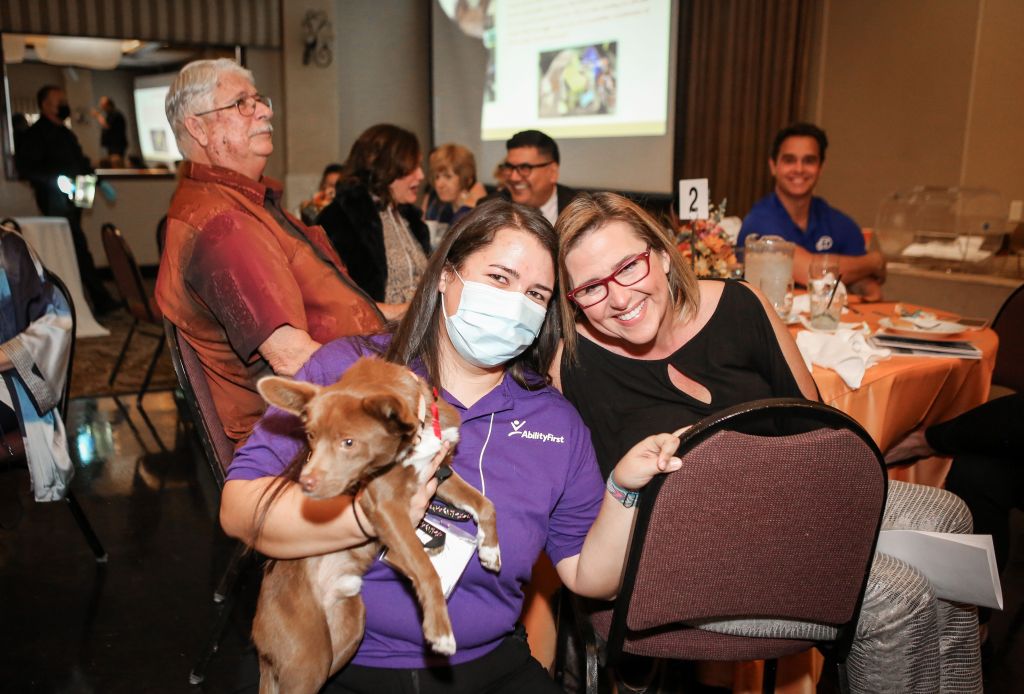
AbilityFirst is a program that supports children/adults with physical and intellectual disabilities. Last week, I had the honor of speaking at an AbilityFirst fundraiser. I discussed the impact they have had on our family. I shared how difficult the closures of school, support services, and the AbilityFirst program was on our family. I always say it takes a village to raise up Emily. The lockdown negatively impacted our families mental health and wellness. Programs like AbilityFirst are key to supporting the mental, physical, and emotional well-being of our family. 

Adopted Ben right before my talk
In the middle of great friends:
Kathy and Darrel
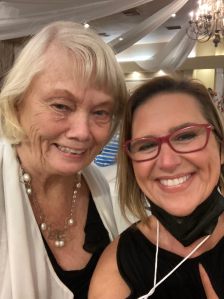
Susan Short, Guild Member & Emily’s Nana
April Stover, Senior Director of Programs

Here is the message I shared. It is my hope that every caregiver has a wonderful support community. Our family is lucky and blessed to have amazing support. We are grateful to be able to lean into it as school restarted and many services have resumed after a long year.

RAINBOWS FOR ABILITYFIRST:

My daughter, Emily, has been a participant at AbilityFirst for 15 years. I cannot believe it has been that long. I love the opportunity to share the impact and support AbilityFirst has provided for our familyThe pandemic of 2020 magnified the importance of AbilityFirst.

Our family is not unique. I do not think anyone in the world can say that the pandemic did not impact their life. We have all suffered losses. The loss of friends and family. The loss of gathering in-person for live music and events like this. We missed weddings, funerals, graduations, cancer screenings, well-checks, dental cleanings to name a few.

Overnight the world seemed to stop. 

In our home, we experienced many repercussions. In 24 hours every resource that Emily had access to was gone. Think about how difficult it was for you to adapt to the changes that happened overnight. Imagine if you had an intellectual disability that prevented you from understanding the circumstance. You wake up one morning and your bus doesn’t come to take you to school. You don’t get to see your teacher or your friends. No one comes to visit you at your home. You can’t go to horse therapy or physical therapy. Your after-school program is gone. You cannot go inside any store because you won’t keep a mask on and no place will make an exception. You are a prisoner in your home and you don’t understand any of it. You are abandoned. This is how I can only imagine it was for Emily because she drastically changed during this time.

My Sweet daughter became angry. She was agitated. Her anxiety increased. She became outwardly distraught and depressed. As her primary caregiver, I now had the job 24/7 to meet her needs. I was expected to fill the roles of every person in our care village. We had no external resources, and we had a daughter who did not understand any of it.

I consider myself a good mom and caregiver. I love caring for Emily, but I learned a long time ago that Emily’s care was more than a one-woman job. My ability to meet her needs and my own needs was not possible. Yet, this is where we were.

I struggled through several weeks running myself ragged and juggling all the things as best as I could. At some point, the pressure, overwhelm and exhaustion took over. I felt trapped in my life and in my home for the first time in years. I could not concentrate on my work. I was losing my patience. I was struggling to be empathetic and compassionate towards my family. I was experiencing caregiver burnout. 

Caregiver burnout is a state of physical, mental, and emotional exhaustion. Left untreated, it can lead to compassion fatigue. You can begin to get negative and lose your ability to care or have empathy for your loved one. You shut down. It is a survival mechanism. I felt myself on the brink of compassion fatigue. 

I could not continue to operate like this. My battery was empty. I had nothing left to give. Something had to change. 

We had a family meeting to discuss Emily’s care. We made a plan for me to get out of the house each day. Even if that meant sitting in my car in the driveway. We decided to take a risk and open our home to a few outside people to help care for Emily. I was able to concentrate at work, which had been a struggle for the last 3 months. We had several video visits with Emily’s doctor to try different medications to manage her agitation and anxiety. We had minor success with these tools, but Emily was still not herself. She was still discontent. She wanted her life back. She needed to get back into the community.

After almost a year, AbilityFirst began offering 1:1 community services. It was only a few hours a couple times a week, but it was enough to start seeing changes. Emily was still angry and agitated at home, but she thrived on her outings. She was in her element. I was able to breathe and feel relief. I had time to do more than my work tasks. I had a few minutes to hear my thoughts. I was able to pause, breathe, and reflect.

Since school started back in September and AbilityFirst is offering program 5 days a week, Emily smiles again. She laughs. She is happier at home because her time there is limited. I can take better care of myself. This makes me be a better caregiver to Emily. I am caring for Emily from a place of compassion, empathy, energy, and gratitude again.

The gap that AbilityFirst fills in our family care plan is vital. We rely on them to support Emily in ways we are unable to. The services they offer, help us maintain stability and wellness in our home. Everyone is happier and healthier: mentally, physically, and emotionally.

It is through your support they can continue to support caregivers and the ones we love dearly. On behalf of all the families that AbilityFirst serves, I want to thank you for your generosity. You are rippling change, one family at a time… so keep on rippling…..Because Ripples Make Waves.

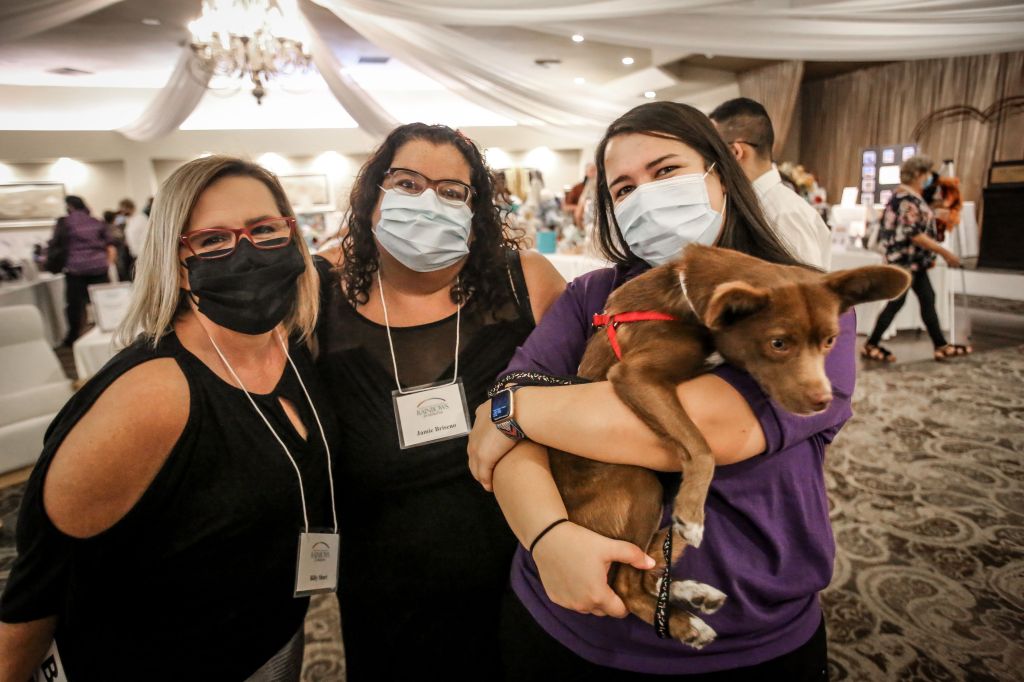
AbilityFirst Staff (Emily’s Crew: Jamie and Sommer)
Bidding on Ben 30 seconds before I spoke!

You Always Have Something to Give

I have been thinking about Lucky all weekend. I was wondering if the time was right to share his story. When he passed away in February, I could not do it. I cannot begin to express the impact that ragged, four-legged, furry misfit had in my life. I have shared space with a lot of pets during my life. Lucky was the best of the best.

Each pet that has come into my life has given me more than I have ever given them. They each left a different impression and impact. Some of them shaped me into the caregiver I am today. Others cared for me more than I did them. Lucky definitely was in that category. He lifted me up and held me when there was no one else I could turn to.

I grew up poor. There were always more bills at the end of each paycheck. I remember my Mom mixing powder milk into the last ounce of milk in the gallon to hold us over until payday. I grew up without money or material possessions, but it had a whole lotta love, and our basic needs were always met. My parents were champions of the displaced, discarded, unwanted. Our tiny, run-down 400 square-foot home that my Great-grandfather built housed many souls, some two-legged and some four. Every space in our house contained a functional piece of furniture. A place to sit, eat, or sleep. We did not have anything that did not serve a purpose inside the home. A sofa by day was a bed to a pet or human by night.

We were too poor to get our pets from breeders or pet stores. Our pets were animals living in the streets that needed a roof and a meal. My siblings and I scooped them up and brought them home. Sometimes Mom or Dad did the scooping. A posse of poor, lost souls that found each other and banned together.

One of the long-time occupants in our home was a black cat named Charlie. This cat was one of six in a litter of kittens one of our other tenants delivered. She was the runt of the litter. We did not think she would survive, but she did. I begged my Dad to let me keep her. Charlie let me dress her up in doll clothes and carry her around like a baby. Charlie snuggled under my neck until I was asleep. Once I was sleeping, she would sneak out of my room and stay up with my Mom. My Mom’s hobby was writing. She would write after us kids went to bed. Sometimes she was up until one or two in the morning. When Mom retired, Charlie would come back into my room and nuzzle my neck. I was none the wiser. I told the story that she never left my side. When I was an adult, my Mom shared that Charle would help her write at night.

Charlie outlived my Dad. She survived being hit by a car. She was tiny but tough. My Mom and Stepdad kept Charlie when I moved out of the house. They sighted “possession is 9/10ths of the law” or some other thing parents say. Every time I came home, Charlie greeted me in the driveway. She died not long after Todd and I married. I remember my Stepdad, Joe, calling to tell me. He came home from work and found Charlie was clinging to the window screen. She must have had a heart attack. He said, “Billie, I need to tell you that Charlie passed away, but she died hanging in there.” His humor in sharing the news made the passing a bit easier to process. To this day, when I think of that story, I still smile. My mind conjures up a cartoon of a cat with arms and legs sprawling in the shape of an X.

Our family did not have much when I was growing up, but what we had, we shared. My Mom never denied that we were poor, but she always told me that there is someone out there with less than you. Her attitude was you always had something to give. My parents opened our home to anyone in need without knowing how they would do it or if it would work out, but they said yes. I acted on impulse and took a page out of their book.

This weekend I adopted a rescue dog. He was adopted last year. When his owner was evicted from his home, he was left behind. He is a terrier mix. He is the same size as Coco. I thought he would be a good fit for our home. Actually, I was not sure he would fit in at all. He was nipping at everyone that came close, but I could see he wanted to be loved. I saw a soul that had been abandoned. He was discarded and displaced. I could not leave the event without knowing this guy had a chance. My mind said no, but my intuition was screaming yes.

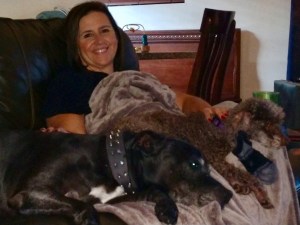
Now I have a senior dog, Coco. A fifteen-year-old poodle and a new member of the house, Ben. A name that Todd got the honor of giving him. I was told this dog liked men. My girlfriend, Kathy, thought Ben would get along well with Todd. I agreed. Todd and Ben had a tough start. He got a little protective of me from the get-go and was aggressive with the boys. Todd tried to restrain him, and that did not go well. Todd has eight puncture wounds in his right. Todd definitely lost the battle. I told Todd I would contact the rescue. I would let them know that Ben was not going to work out. As I looked at Todd’s bruised and bloody hand, I felt guilty. Todd said we needed to give him time to adjust. He has been abused and abandoned. He definitely has trust issues, and he was distressed. He was scared, cornered, and attacked. We cannot give up on him yet.

Ben seems to be adjusting quickly to our home. As I sit here writing well past my bedtime, I think of my Mom and Charlie. I am on the sofa using my iPad (times have changed). I am supporting my iPad on my left thigh. Ben is asleep on my right thigh. I guess the apple did not fall from the tree. I have a soft spot for those that have been discounted and discarded just like my Mom did. I know Todd does too. It is one of the things I love most about him.

At some point in our lives, most of us have felt abandoned or discarded. We all remember someone that came through for us at that moment. Maybe it was two-legged, maybe four. We all deserve a chance to love and be loved. I have no idea what will happen on this journey. I do know that opening my heart to another soul has never been a bad thing. It has always taught me a lesson, helped me grow, or added love I never knew existed.

On that note, I think this article was supposed to be about my Lucky Boy. He added more to my life than I ever expected. He helped me grow. He taught me lessons. He was there for me during one of the darkest seasons of my life. I will never forget his energy. His love. His devotion. His story deserves to be told, but I am not ready to go there. When his story is told, it will be epic. Stay tuned.

Making Time to Connect

This last week was incredible. I had the opportunity to connect with friends and family in person. There is something magical about getting together and sharing a meal, a meditation, a walk, a story. It is incredible when the experience fuels your soul and fills your cup. I was blessed to have several energizing interactions this week. I was able to connect with my family and meet new people.

It started with an impromptu birthday party. I invited my sister over to celebrate her birthday, but I did not think she would accept. Carol did not inherit my social gene and will usually decline my invitations. I was excited that she said yes! It was too hot for pumpkin spice lattes, but we did have pumpkin pie for dessert. 

With temps in the nineties, Todd broke out the Weber to grill.  We made some family favorites to go with the grilled meat. We had a wonderful afternoon by the pool. I cannot remember the last time my sister visited. My niece, Tori, came with her. Tori and Justin chatted about all things video games. Carol and I took Emily swimming. My long-time friend (and Emily’s Godmother), Pam, came over too. It was great to just hang out with the family and celebrate another year with my sister.

Later in the week I scheduled a meet-up with a friend from Clubhouse. I met Munirah in The Pause Breathe Reflect room. I joined the club in April and have been meditating there since. I had no idea the impact this community would have on my life. I began meditating two years ago to help me fall asleep. The intentional meditations that happen several times each day in Clubhouse have helped me expand my practice. I now meditate throughout the day and look forward to meditating live on the app with my friends. This community is incredible. The support of many of these individuals beyond the room is indescribable. They message me and lift me up when I am down. We do not share the same beliefs, religion, politics, views, but we take the time to learn from each other. We value our likeness as well as our differences. I cannot wait to meet so many cherished friends over the next year.

Munirah and I met in Long Beach. We walked, talked, and we shared a meal. The highlight of the day was being on the beach together. We sat by the water and participated in a live Pause Breathe Reflect™ meditation. It was great to spend the day with her energy. She and I were able to share our lives and journey. We learned more about each other. Isn’t that a gift? Getting off the DO train and being fully engaged with another person. Meeting her in person connected us more. 

My week of connection culminated on Sunday with another in-person meeting. I got the opportunity to spend the afternoon with two moms that have children with rare genetic disorders. I met up with Effie Parks and Jessica Patay. Both moms are advocates for families raising kids with genetic disorders, health challenges, and unique needs. 

Part of my health and wellness journey was to turn off the television. I started to listen to educational and self-development podcasts. I was introduced to Effie Park’s podcast: Once Upon A Gene. She interviews people from all areas of the rare community. Her guests include adults living with rare conditions. Parents with children that have rare diseases. She also talks to doctors, scientists, athletes, and therapists whose mission is to support and educate this community. This podcast opened my eyes to so much I did not know that I did not know. I love learning new things, and I love the community Effie has brought into my life.

I met Jessica through a mutual connection. Jessica is the founder of We Are Brave Together. The mission of this organization is support. They support moms and dads around the world that care for uniquely abled children. I recently became a facilitator for a group in my area. The monthly meetings allow parents to connect with others that understand the unique challenges and struggles they face. 

We Are Brave Together also offers affordable weekend retreats where overwhelmed and stressed-out moms can recharge. These weekends only cost $200. There are limited scholarships available if someone cannot afford the cost. The weekends are all about pampering mom in self-care, rest, fun, and connection. It is exciting to watch this organization grow.

Effie lives in Washington and is in California for a few weeks with her son, Ford. He is enrolled in intensive physical therapy that is not available in Washington. I just knew I could not let this opportunity pass me by.  I wanted to meet Effie and Ford from the moment I started following their journey. Effie and her family remind me so much of our family when Justin and Emily were little. I had a blast hanging out at their rental house. It was great to play with trucks and learn more about Ford. He is a character. His personality and humor are joyful and contagious.

After a wonderful dinner with Jessica, Effie, and Ford, we said our goodbyes. It was late Sunday evening.  I decided to make the drive home in silence. As I drove home in traffic, I reflected on the connections of the week. My cup was full of joy and gratitude. 

I am proud of myself for making time to connect this week. I have said before when we say yes to something, we are saying no to something else. This past week I said no to a lot of work. I said no to chores and recurring tasks. There is laundry that did not get washed, unswept floors, medication boxes to fill, but I have no regrets. The memories of this week will outlast any task that went unfinished. On that note, I need to put a load of clothes in the dryer.

Golfer State of Mind

Am I really going to write about golf this week? This is the thought that emerged as I sat down to write this weekend. It all started as I was decluttering Emily’s room and came across a few golf balls. They were strategically placed where Emily could not access them (and too high for me to easily reach). Out of sight and out of mind. Well, the site of the golf balls reminded me of the interactions in which we acquired them. 

One of Emily’s top three activities is being pushed in her wheelchair out in the community. It is up there with riding on the bus or in the car. When Emily is engaged in these activities, she is focused. She engages with her surroundings and watches people intently. Emily observes everything that is happening around her. Generally, she is calmer and quieter during these activities. 

Due to my ongoing foot issues (a story for another time) and having a job, I have tried to make sure Emily gets out of the house and walks. During the summer, one of Emily’s favorite friends, Erica, took Emily on many walks. When they returned home from one of these adventures, Erica tells us that a golfer gave Emily a golf ball. She says that the golfer walked from his game to meet them at the fence between the golf course and the sidewalk. He tells Erica that he noticed Emily and that she spoke to him. He had to come to meet them. The golfer chats with Erica and Emily and then gives Emily a neon yellow golf ball.

Erica tells the story and seems perplexed and also appreciative of this interaction. I let out an audible laugh. I share with Erica that this is not the first time a golfer has done this during Emily’s life. Over the past several years, it has occurred 4 times. We have the golf balls to prove it. This latest situation sparked my curiosity about these interactions. What is it about Emily that speaks to golfers? Why do golfers see her (I mean REALLY see her)?

No one in our house plays golf…anymore. Todd used to play golf before we had children. He quit because it was not relaxing to him. He said a hobby should help you relax and not add stress. I was intrigued by his short-lived experience as a golfer but never pursued why it was challenging to him.

I have heard that golf is as much a mental sport as it is a physical sport. Todd’s experience seemed to support that there is a mindfulness aspect to the game. What skills are needed for golf? How do these skills relate to Emily? One golfer reaching out to Emily on our adventures could be a coincidence. Since this has happened on multiple occasions, there has to be a connection.

I started reading articles about golf techniques and skills. In my search, I found an article by David Mackenzie. It did not take me more than a quick glance to think I had found an answer. The article is about the 7 most important mental skills for golf. The first 3 attributes discussed gave me clarity:

  • Focus and concentration
  • Awareness and being present
  • Ability to stay calm

According to David’s article, practicing these skills will improve your golf game.

I would add that practicing these skills will improve your life. I have spent the last three years developing these skills. I would consider myself a novice, but through practice, I am getting better. I am learning the power and gift that come when we focus and concentrate on a single task. I actively practice managing and redirecting my thoughts. I am aware that every circumstance does not require action (or reaction). I am learning to enjoy the moment and observe what it feels like to be in it. Not rushing onto the next thing. Incorporating these skills has enriched my life and my relationships with others.

After reading the article, I came to the unscientific conclusion that the golfers who engage with Emily are skilled at these practices. They have become good at developing focus and awareness. They are taking in the environment that surrounds them. They are concentrating. They are present. From this place, they are open to her energy. They are aware of her observing them and engaging with them without saying a word. Some are called to take action and interact with Emily.

Golfers do not have exclusive access to these practices. They are available to all of us. Practicing these skills helps get us out of our headspace. When we get out of our heads, it changes our perspective. We see things we may not have noticed before. There is nothing that delights me more than witnessing Emily being seen and acknowledged. It is beautiful to observe Emily making a connection with someone. It is magical when that person sees her and responds.

Loving The Lasso Way

“If the Lasso way is wrong, it’s hard to imagine being right.” Trent Crimm, The Independent. I agree with you 1,000 percent Trent Crimm of The Independent.

I was recently introduced to Ted Lasso by my favorite meditation instructor, who I have yet to meet in person, Michael O’Brien. He is the founder of The Pause Breathe Reflect™ Movement. Michael mentions Ted often with affection and fondness. His love for a fictional character piqued my curiosity. I wanted to see for myself what all the hype was about.

The first step was subscribing to Apple TV. I did not want another subscription. I hesitated to see what another subscription was going to add to my monthly expenses. Turns out the cost for a year of Apple TV is less than taking the family to the movies (not that we have done that in years, or ever). Who knew? I hit the subscribe button and scanned my finger. Done. (Wow. The future is now.)

I had to encourage Todd to watch it. He reluctantly gave in after some begging and a small amount of guilt. I reminded him of a plethora of not so wonderful television shows I have lovingly sat through with him. He loves SciFi and action shows but is not a fan of comedy and definitely not into watching sports. Ted Lasso is a comedy about sports so not an easy sell. I am grateful he was willing to indulge me. (Also, grateful Emily will watch football with me. The women are the sports fans in the Short house.)

We both fell in love with the show from the first episode. It didn’t take two or three episodes to get us hooked. It is funny, witty, and wonderful. The show takes on serious issues: infidelity, death, divorce, relationships, mental illness to name a few. It does it with a sense of humor and hope. The two H’s I have leaned on through the highs and the lows in my life. Watching Ted win over haters and overcome challenges has me cheering from my sofa. He is the underdog we all want to see succeed. I have always been a sucker for the underdog.

I have never watched a series and said, “I cannot wait to rewatch this”. Not until Ted Lasso. As I wait impatiently for the next episode to drop, I have been rewatching season one. I always feel better at the end of an episode than when it started. I am full of joy (and you all know I am about the joy). I could talk about my love of Ted Lasso all day.

Rather than me going on and on about Ted, I will share some of his words of wisdom. I am certain his perspective will brighten up your day. Maybe you will even laugh out loud:


“Takin’ on a challenge is a lot like riding a horse. If you’re comfortable while you’re doin’ it, you’re probably doin’ it wrong.”

“I believe in communism. Rom-communism, that is.”

“If God wanted things to end in a tie, she wouldn’t have invented numbers.”

“Even Woody and Buzz got under each other’s plastic.”

“I promise you there is something worse out there than being sad. And that is being alone and being sad. Ain’t no one in this room alone.”

“Be curious. Not judgmental”. (Walt Whitman said this first but Ted says it so well.)

“I want you to know, I value each of your opinions, even when you’re wrong.”

“I have a real tricky time hearing folks that don’t believe in themselves.”

“Don’t let the wisdom of age be wasted on you.” 

“I believe in hope.”

I believe in hope as well Ted Lasso. With that, I hope Ted brought a little smile to your face. I know he brings a smile to mine. If you decide to give Ted Lasso a chance, I would love to know what you think of it.

To find out more about Michael O’Brien go to: https://www.michaelobrienshift.com/home

Michael just started another One Ripple Challenge. It is running for 66 days and ends around Thanksgiving. It is never too late to join and no ripple is too short or too small. Register for the free challenge that promises to change your life:
https://www.michaelobrienshift.com/oneripple

Toxic Positivity: Do I Have It?

There is a concept that I keep hearing that piqued my curiosity. It is the concept of toxic positivity. I have heard it discussed on Clubhouse. It has been the subject of posts as I scroll on Facebook and Instagram. What exactly is toxic positivity? Do I have it?

According to choosingtherapy.com, toxic positivity is the belief that everyone should be positive all the time, regardless of difficulties, tragedy, or hardship. Those who practice toxic positivity are often obsessed with positivity and “good vibes” and can come across as being dismissive of the expression of any other authentic emotions besides happiness.

Is it possible to be too positive? As I read the definition of toxic positivity, it does not sit well with me. Not everyone knows “the right” thing to say. We, humans, get it wrong sometimes. Our attempt to lift someone may do the opposite. I have received comfort and advice that did not comfort me at all. Here is a short sample of a few:

  • God only gives you what you can handle.
  • At least your child can: (almost anything added here is going to rub me wrong).
  • You are so lucky you will never be an empty nester. 
  • Calm down.
  • It takes a special person to care for a special child. 

I can believe the person(s) meant to invalidate my feelings, or I can also choose to believe the intention was good, even if I did not receive it that way. We are always at choice.

Someone recently commented that my Instagram feed was too positive. The person did not accuse me of suffering from toxic positivity, but the comment got me curious about my positive outlook. Part of my outlook is nature, and part of it is nurture. My Mom used to say, “90% of people are well-meaning and good, but you will only hear about the 10% that are not.”

I was raised to look for the silver lining AND that my feelings were valid. I am not obsessed with positivity at the expense of authentic emotion. I believe emotions should be honored. Grief, anger, sadness are just as valuable and needed as happiness, joy, and peace. Life is a beautiful mix of emotions. Both positive and negative.

When I was sixteen, my Dad died suddenly of a heart attack. There was grief and sadness in my loss. Over 30 years later, I still grieve the loss. I am sad that he did not get to walk me down the aisle when I got married. I get angry that he was there when my oldest nephews were born but never got to hold my kids. Those are the negative and horrible things about my dad dying. I still feel pain over the loss. However, the hurt and pain are only part of the story.

After my Dad passed, my Mom married a wonderful man that loved and supported her. My Dad was a great father, but he was not a good husband. He did not love and cherish my Mom the way my Stepdad did. Todd was there for me when my Dad passed. He listened to me and comforted me in the months that followed. We may not have ended up together if my circumstances were different. Good things come out of bad experiences and bad out of good. Nothing is all black and white. 

I have encountered people that can never see the positive in any situation. The energy it takes to be negative seems daunting to me. In a recent interview I saw with Dolly Parton she said, “It takes just as much work to be negative as it does to be positive, so I choose to be positive.” Amen Dolly!

I think defining someone as having toxic positivity may be up to a therapist or psychiatrist. This coach certainly is not going to label herself with toxic positivity. Others may give me the title. What others think about my outlook on life is none of my business. I will keep believing most people have good intentions and that there is usually a silver lining in any situation if you look for it.